
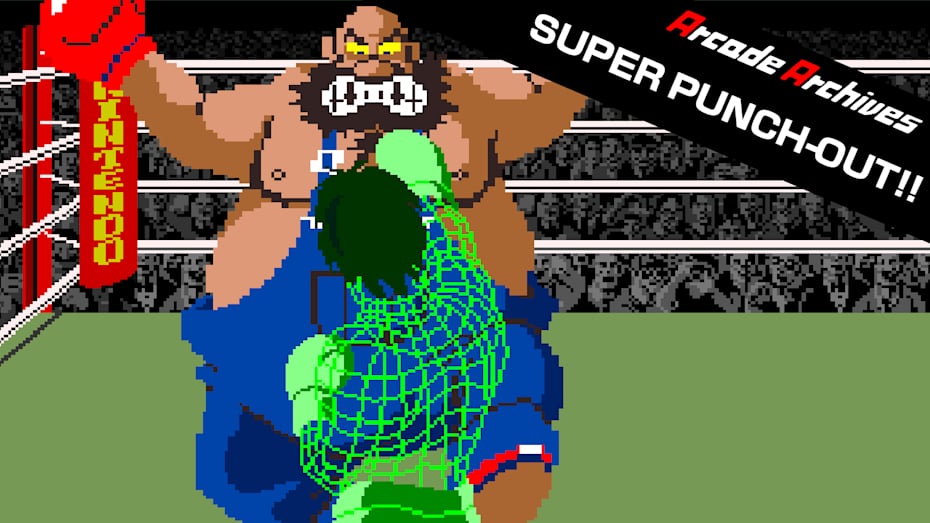

Back in crowded arcade halls of the 1990s, competitive players gathered around cabinets that demanded discipline rather than button chaos. Veterans still recall how super punch out online game preserved that frame-perfect timing when cartridges began fading from retail shelves. Emulation communities later carried the torch, refining input mapping so that Android users could relive those decisive counterpunch windows. Preservation efforts mattered because arcade boxing titles relied on deterministic logic rather than random hit calculation. That design philosophy shaped competitive emulator workflows today. Modern Android setups still treat the title as a benchmark for reaction calibration and latency testing.
Market Positioning Against Modern Arcade Boxing Clones
Precision Over Monetized Spectacle
Contemporary mobile boxing apps focus heavily on cinematic animation and energy bars tied to in-app progression. By comparison, super punch out online game depends entirely on reaction timing and pattern recognition. Deterministic mechanics mean every dodge and counter is governed strictly by user input rather than probability scaling. Competitive players value that predictability because skill development becomes measurable.
Gesture-based clones often smooth touch inputs to compensate for latency. Original arcade logic maintains raw detection windows without artificial buffering. Professional testers frequently use the title to measure emulator response curves because animation frames align precisely with command execution.
Modern arcade clones introduce upgrade systems that inflate damage output through artificial leveling. Classic circuit progression instead increases opponent aggression and timing complexity. Serious competitors therefore experience a purer challenge free from algorithmic balancing tricks.
The Championship Setup Blueprint for Android Fighters
Secure Installation and Clean Configuration
Preparation begins with selecting a reputable Android emulator that supports cartridge-based ROM loading. Storage space should exceed 500 MB to allow shader caching and temporary runtime files. Reliable hosting portals provide the verified package for super punch out online game through encrypted HTTPS delivery.
Permission settings must be enabled temporarily to allow manual installation. System security options should be reverted once setup concludes. Emulator launch screens typically request directory mapping for ROM assets. Users should assign a dedicated folder to prevent path conflicts.
Video backend configuration follows immediately after file detection. Vulkan often delivers better GPU efficiency on devices running Android 12 or newer. OpenGL may perform more consistently on entry-level chipsets.
Control mapping requires careful placement of jab, hook, and dodge inputs along natural thumb arcs. Comfortable layout reduces fatigue during extended circuit climbs. Frame delay configuration should initially remain at default values until multiplayer testing begins.
Profile saving ensures persistent optimization across sessions. Backup export options provide added stability in case of emulator updates.
Android Hardware Stress Testing in Real-World Scenarios
Entry-level devices equipped with 3 GB RAM handled Minor Circuit matches without dropped frames during testing. Budget chipsets maintained stable sprite rendering thanks to lightweight asset architecture. Mid-range smartphones released after 2022 demonstrated nearly zero perceptible input lag during defensive counters.
Flagship models with 120 Hz displays improved animation clarity noticeably. High refresh rates enhance motion readability which helps players identify subtle opponent tells. Thermal output stayed moderate even during thirty-minute tournament simulations.
Battery consumption remained lower than most modern 3D fighting games. Lightweight 2D sprite rendering reduces GPU strain dramatically. Background app switching caused no memory crashes during evaluation.
Network bandwidth usage proved minimal due to small data packet exchange in multiplayer relay sessions. Mobile users on limited plans benefit from that efficiency. Overall compatibility spans low-end to premium Android hardware comfortably.
Targeted Solutions for Three Critical Technical Obstacles
Multiplayer Desynchronization Drift
Occasional timing drift appears when players use mismatched frame delay values. Advanced synchronization menus on both devices must display identical delay numbers before match start. Lobby recreation resets internal timers and stabilizes connection. Light jab exchanges should be tested briefly to confirm real-time alignment.
Shader Rendering Flicker
Rare graphical flicker sometimes emerges from GPU driver conflicts. Video backend settings inside emulator options allow switching between Vulkan and OpenGL. Application restart finalizes the pipeline change. Practice mode observation confirms sprite transparency stability during special attack animations.
Router-Based Lobby Timeout
Connection errors may stem from restricted communication ports. Router administration panels permit enabling UPnP for automatic port mapping. Firewall whitelisting of emulator executables provides an alternative method. Successful lobby handshake confirmation appears within seconds once configuration is corrected.
2026 Relevance Verdict in the Era of Native Mobile Gaming Dashboards
Android gaming dashboards now integrate performance overlays and automatic screen capture tools. Native optimization engines allocate battery resources efficiently during high-load 3D sessions. However mechanical depth remains the defining metric for competitive endurance.
Arcade logic embedded in super punch out online game prioritizes reaction mastery rather than cosmetic upgrades. Gesture-driven fighters dominate storefront rankings yet often simplify defensive systems. Competitive communities continue favoring structured pattern recognition over monetized progression loops.
Cloud gaming platforms provide accessibility but introduce unavoidable network latency. Local emulation still delivers tighter response windows. Tournament organizers prefer deterministic titles because fairness depends on predictable input timing.
Long-term mastery value therefore persists strongly in 2026 despite evolving mobile ecosystems.
Independent Safety and Hosting Integrity Review
Dedicated infrastructure distributes the package through locally optimized high-speed servers. Direct file hosting reduces dependency on unreliable mirror networks. Multi-engine malware scanning procedures confirmed zero detected threats during the latest audit cycle.
Encrypted HTTPS channels protect data transfer during download sessions. Integrity hash verification ensures file consistency prior to public release. Routine backend monitoring reinforces compliance with advertising and content distribution standards.
Transparent maintenance policies strengthen user trust in stable and secure access.
Advantages and Limitations Overview
Advantages
- Frame-perfect combat logic preserves authentic arcade timing
- Deterministic hit detection rewards skill instead of randomness
- Lightweight Android performance ensures wide device compatibility
- Low bandwidth multiplayer relay supports efficient global play
Limitations
- Requires manual emulator configuration on first setup
- Demands opponent pattern memorization for success
- Depends on stable internet for synchronized online sessions